Fast Track: Rapid Prototyping
Fast Track utilizes iterative prototyping, a rapid design methodology employing simple, low-cost materials, to effectively address complex design issues and develop comprehensive, systems-level solutions. This problem-solving approach is highly beneficial as it offers low-cost, low-risk testing, helps identify and mitigate potential risks and development hurdles throughout the project lifecycle, ultimately promoting project success and enabling the realization of new concepts' full potential.
Client
School of Visual Arts
Year
2025
Target Audience
Designers, Researchers
Visual Direction
Sketches, paper crafts, post-its, tape
Mission
To solve a design problem through iteration and rapid succession of paper prototypes.
Original Pitch
JunkBox began as an inquiry into the psychology of overconsumption and the emotional weight of our physical belongings. This initial pitch explored how we can redesign our relationship with 'stuff'—shifting the focus from mindless disposal to a reimagined system of clutter removal that prioritizes social impact and lasting environmental change.
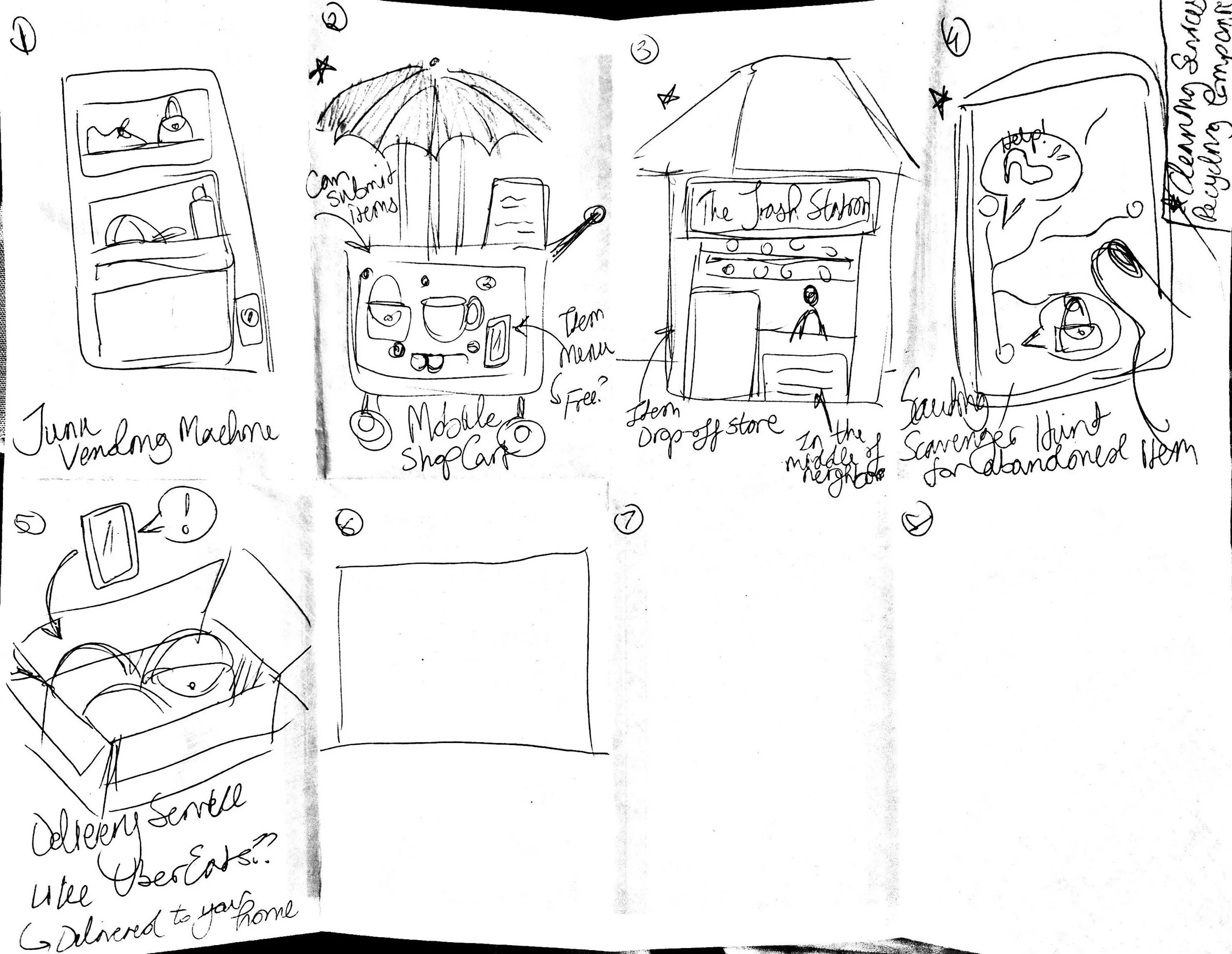
Crazy 8’s Prototype Session
As part of a timed 8-minute design sprint, I worked with the design team to ideate some concepts for my current problem:
What is the best mobile way to help people get rid of unused, wasted junk?
User Journey Prototype
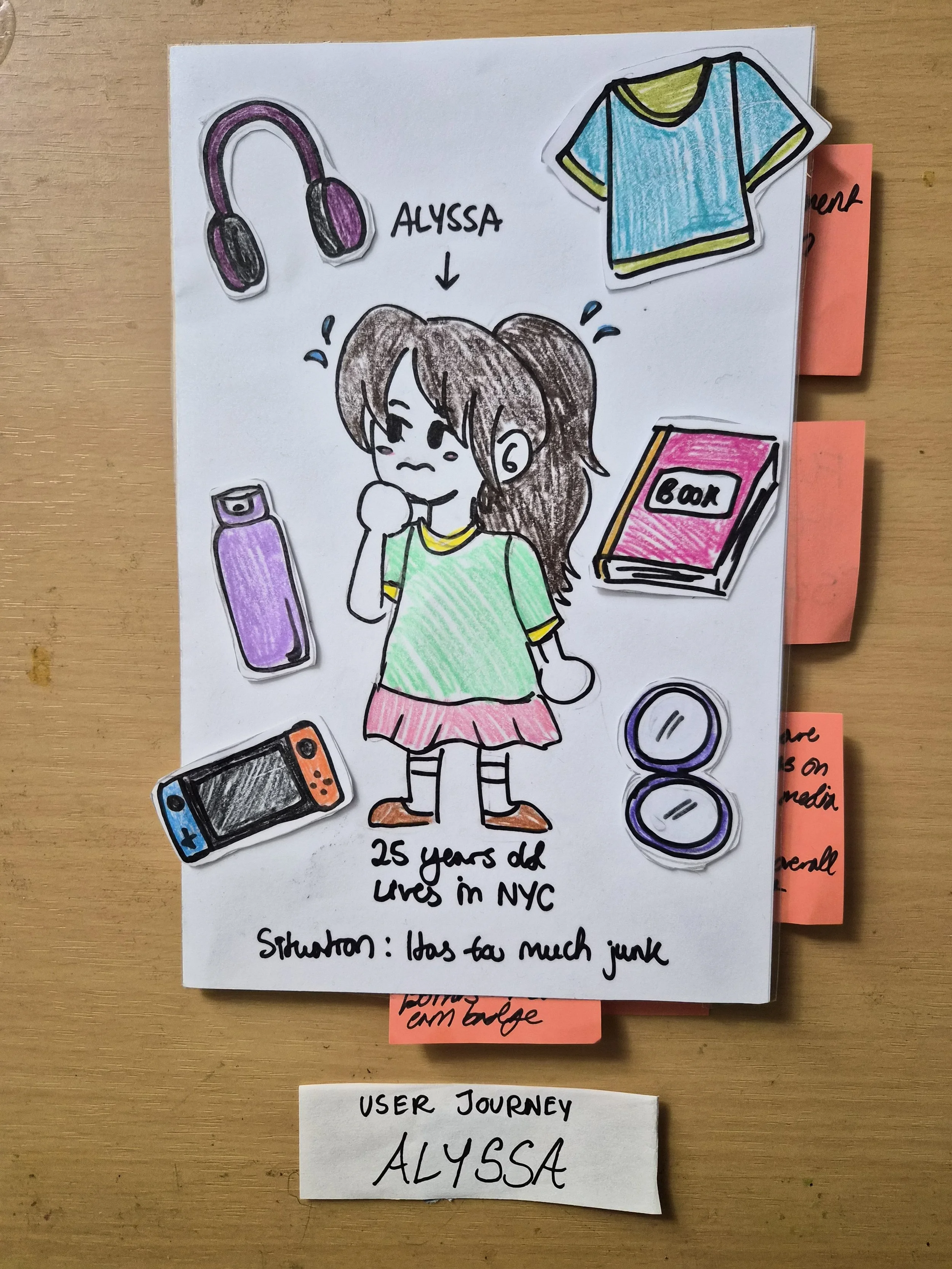
To bridge the gap between waste management research and human behavior, I utilized storytelling to define the primary user journey. By identifying Alyssa’s pain points—clutter, lack of time, and limited disposal options—we can design specific interventions that turn a daunting task into a rewarding community experience.
This step-by-step exploration tests the viability of a hybrid service model. We move from the digital interface (finding a location) to the physical storefront (dropping off items) and finally to the feedback loop (earning rewards). This iterative approach ensures every touchpoint is optimized for accessibility and long-term habit formation.
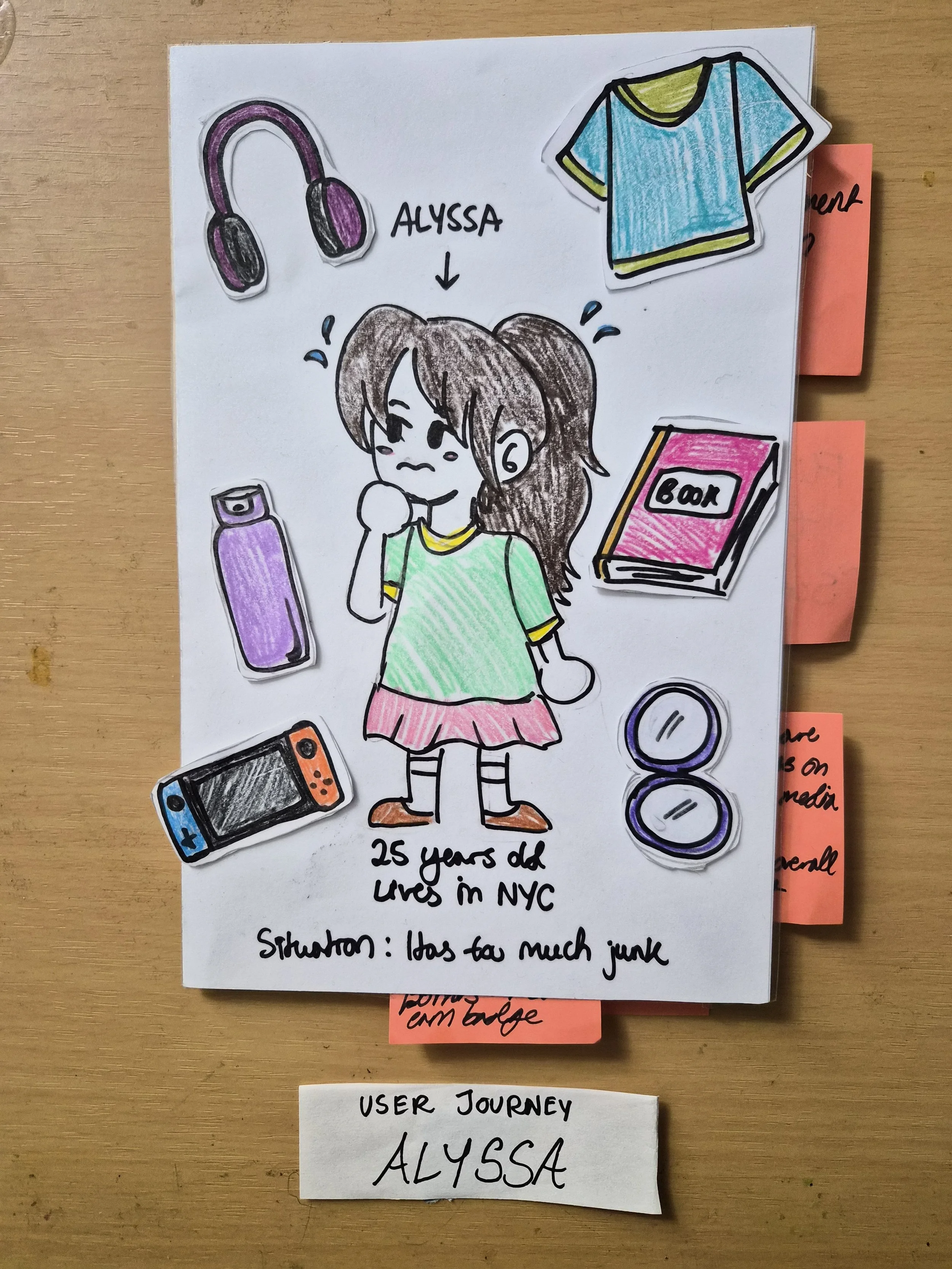
Character background of Alyssa
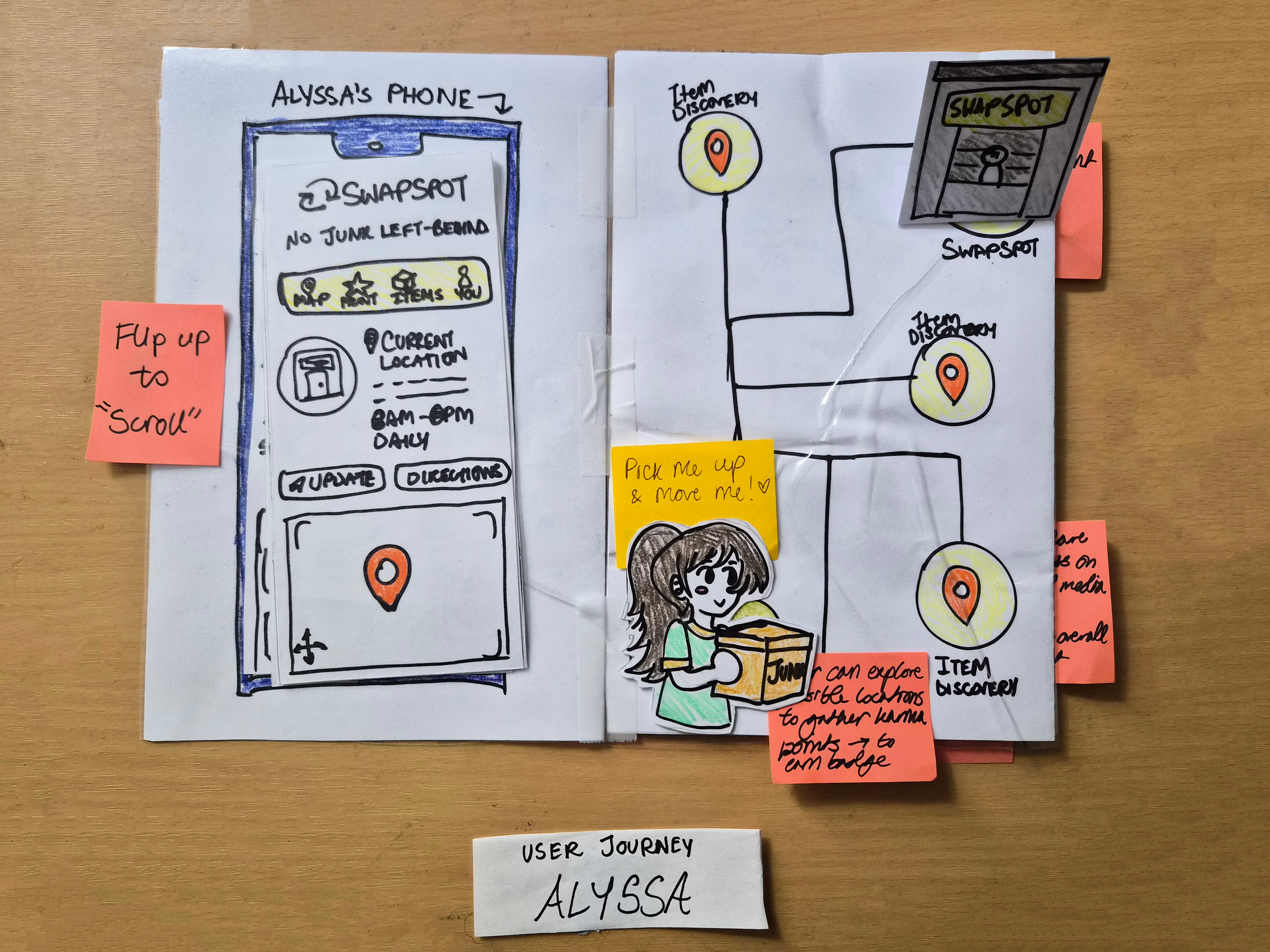
App + GPS map consideration
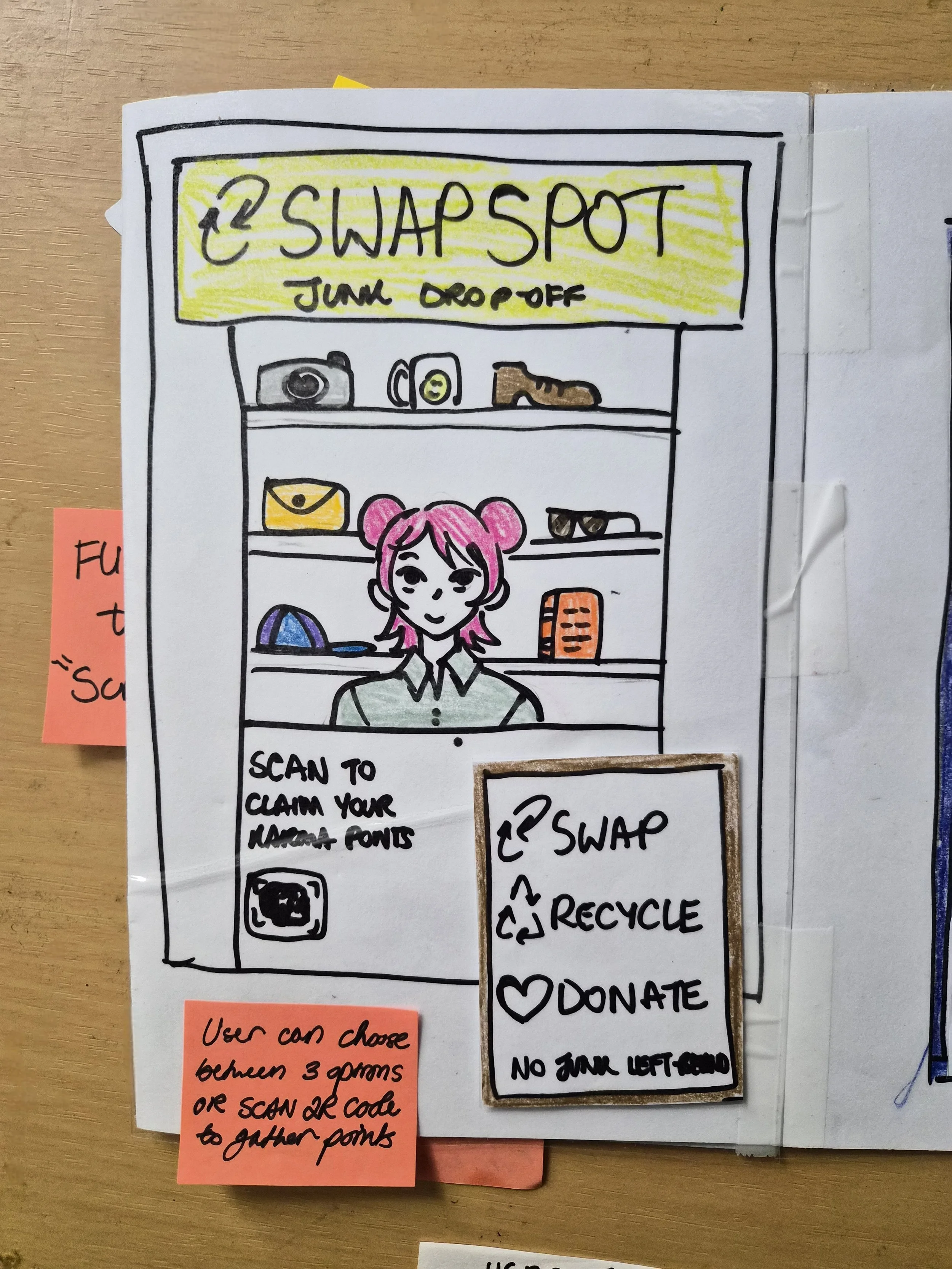
Storefront concept
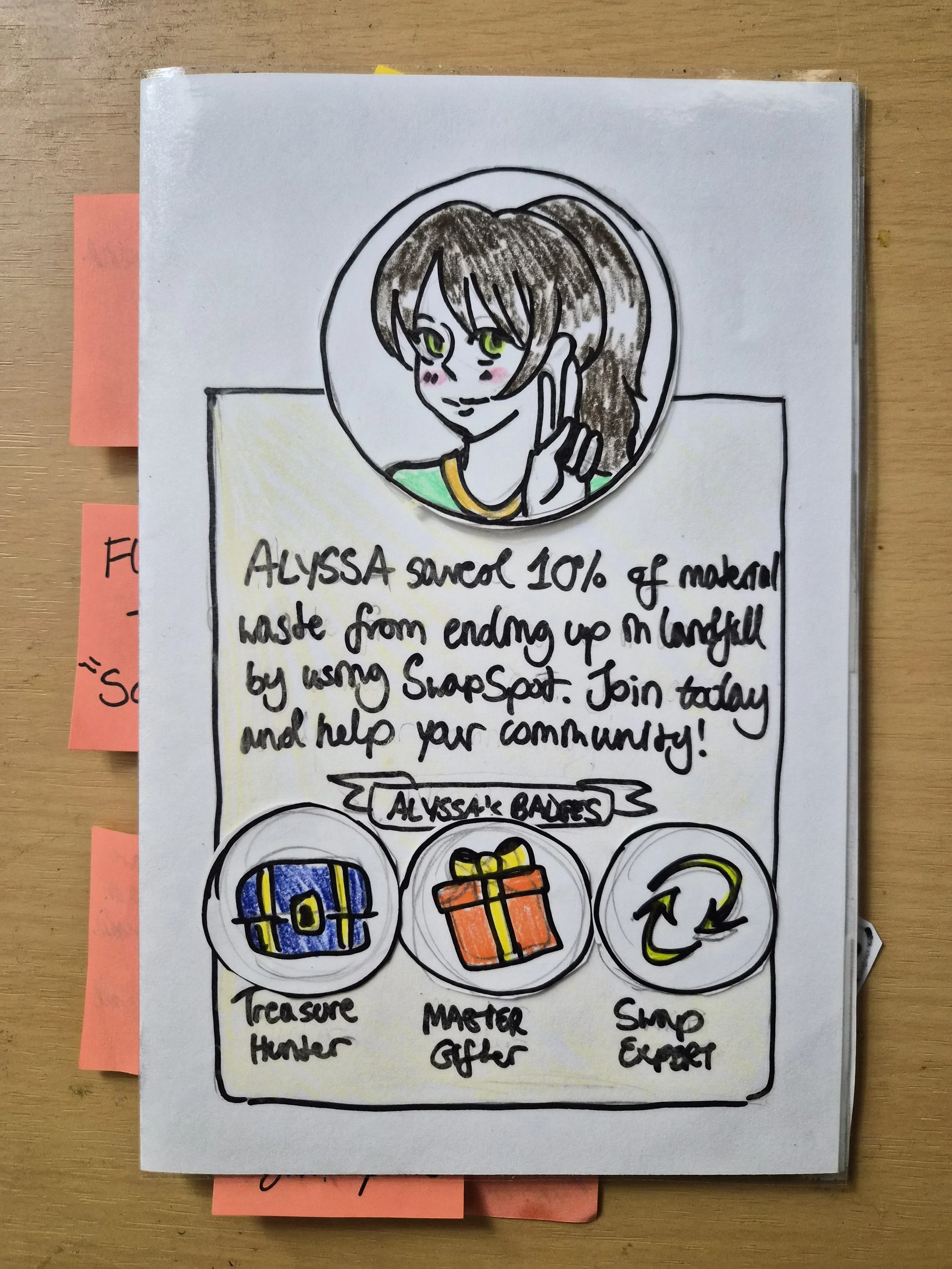
User badges and rewards for Alyssa
Scavenger Hunt
Book Prototype
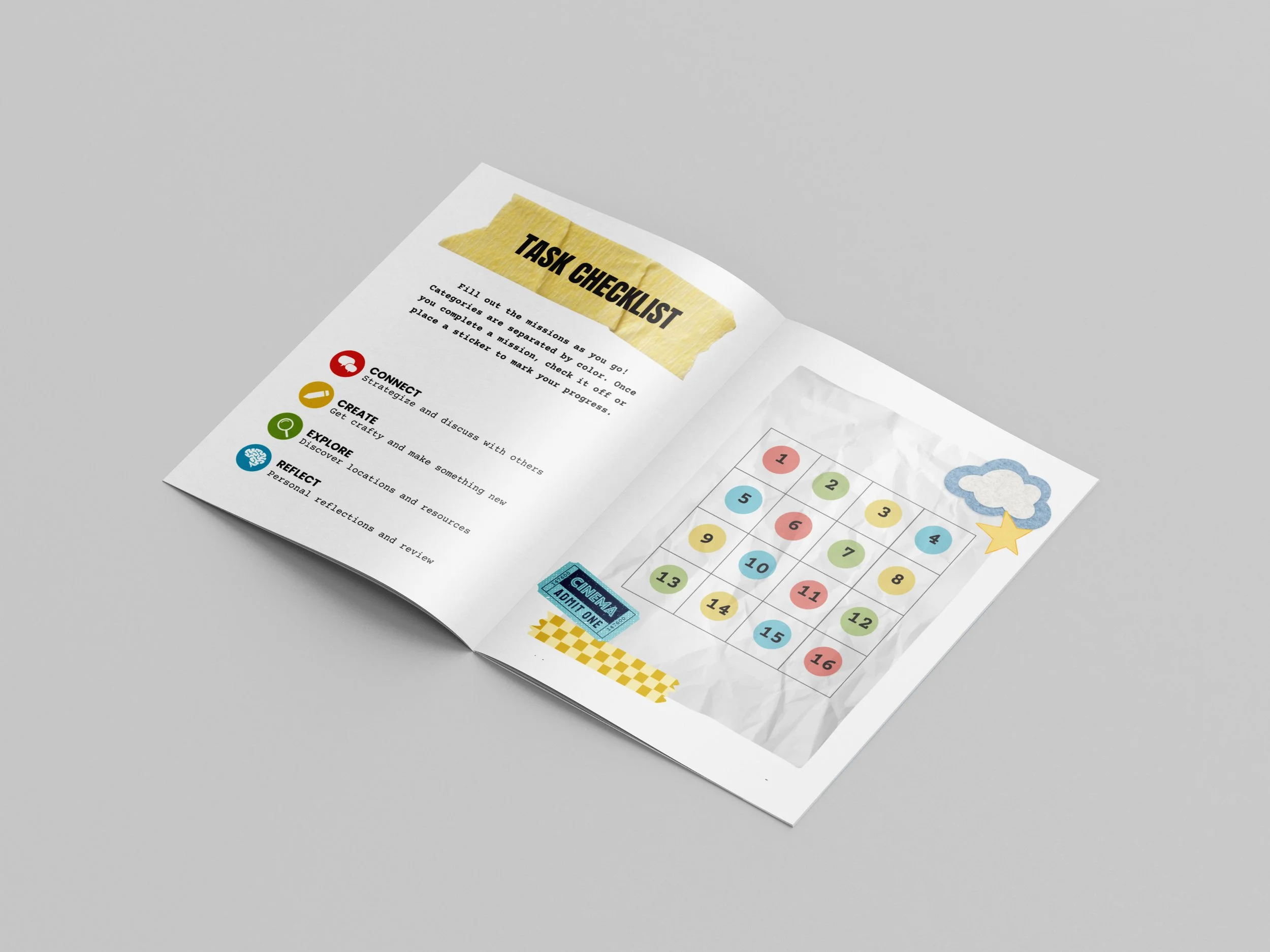
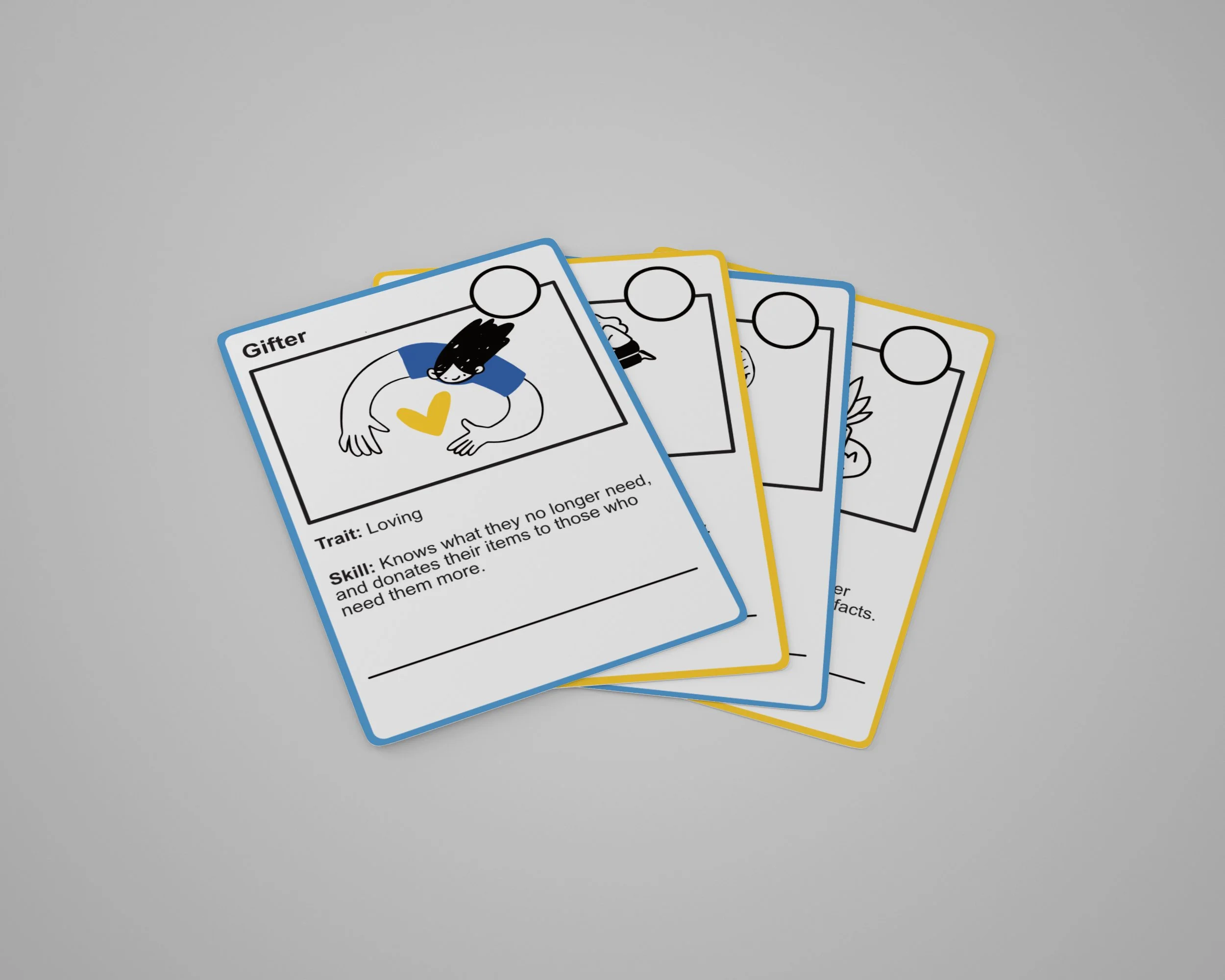
While the initial digital prototype successfully mapped the user journey, research highlighted a missing link: tangible community connection. This insight led to a strategic pivot from a service app to a physical Scavenger Hunt Passport. By gamifying the 'Collect, Trade, Discover' experience, the project transforms mindless disposal into a shared adventure—proving that the most effective way to address systemic overconsumption is to make the solution a rewarding, personal discovery."
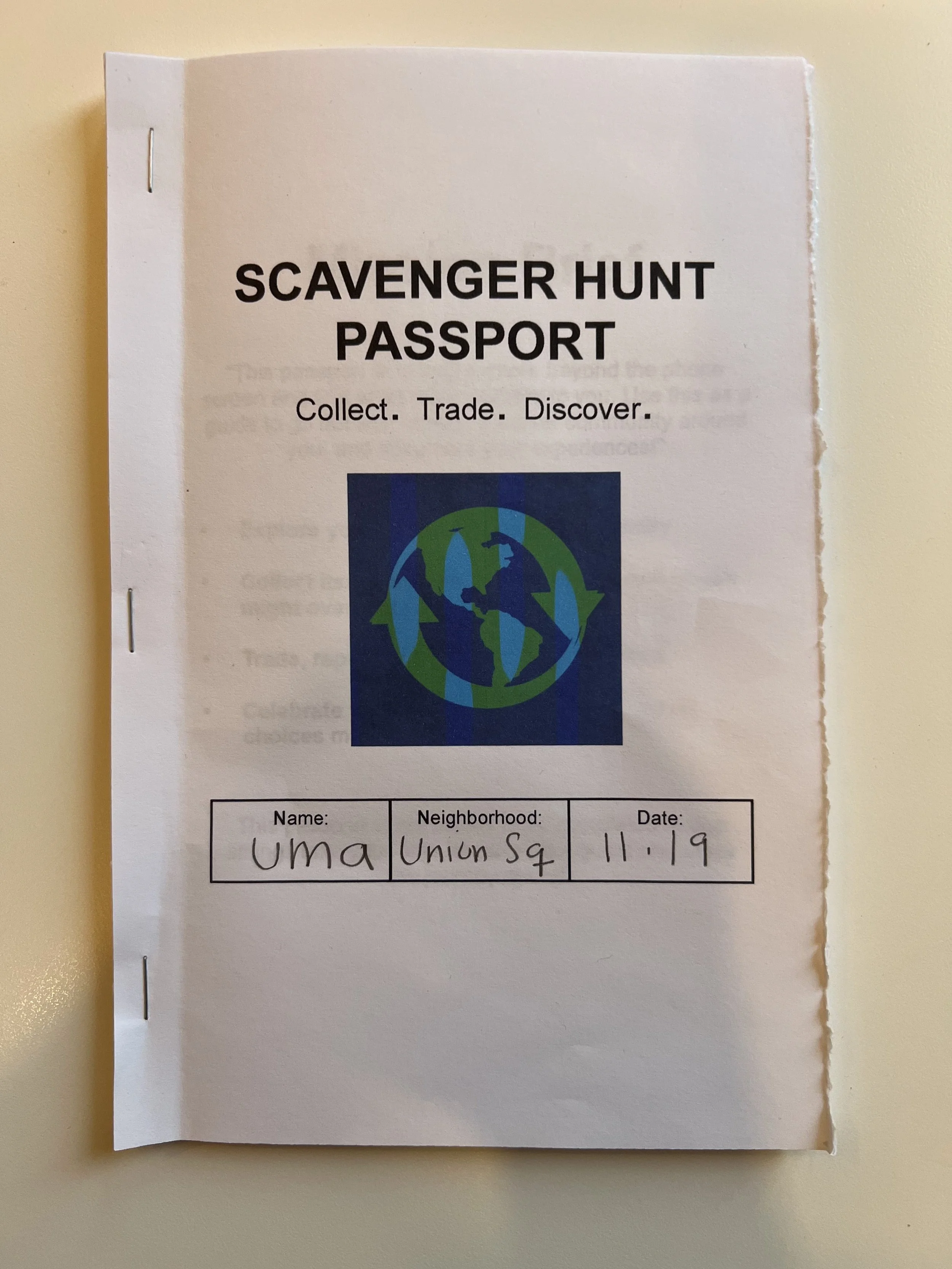
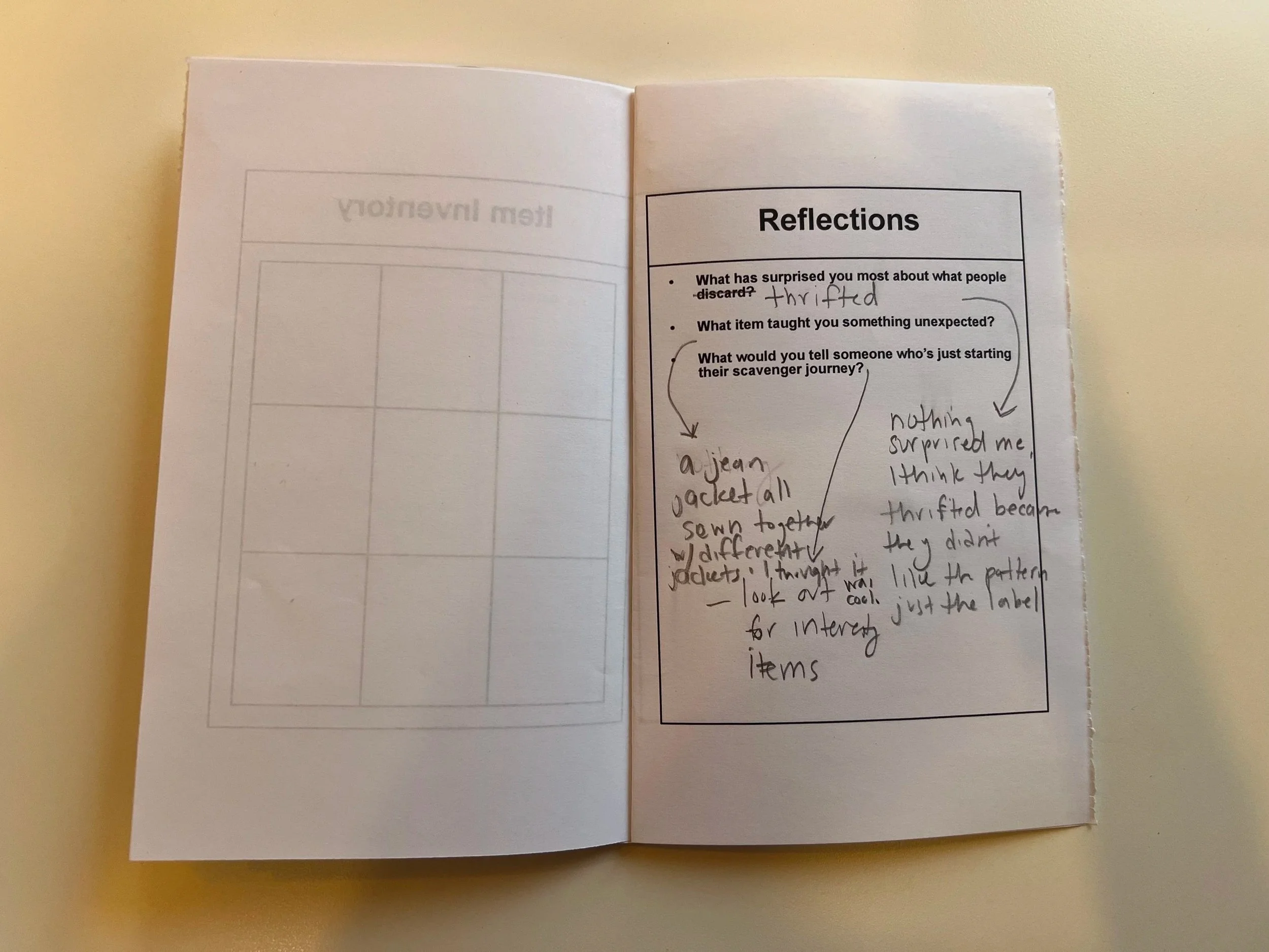
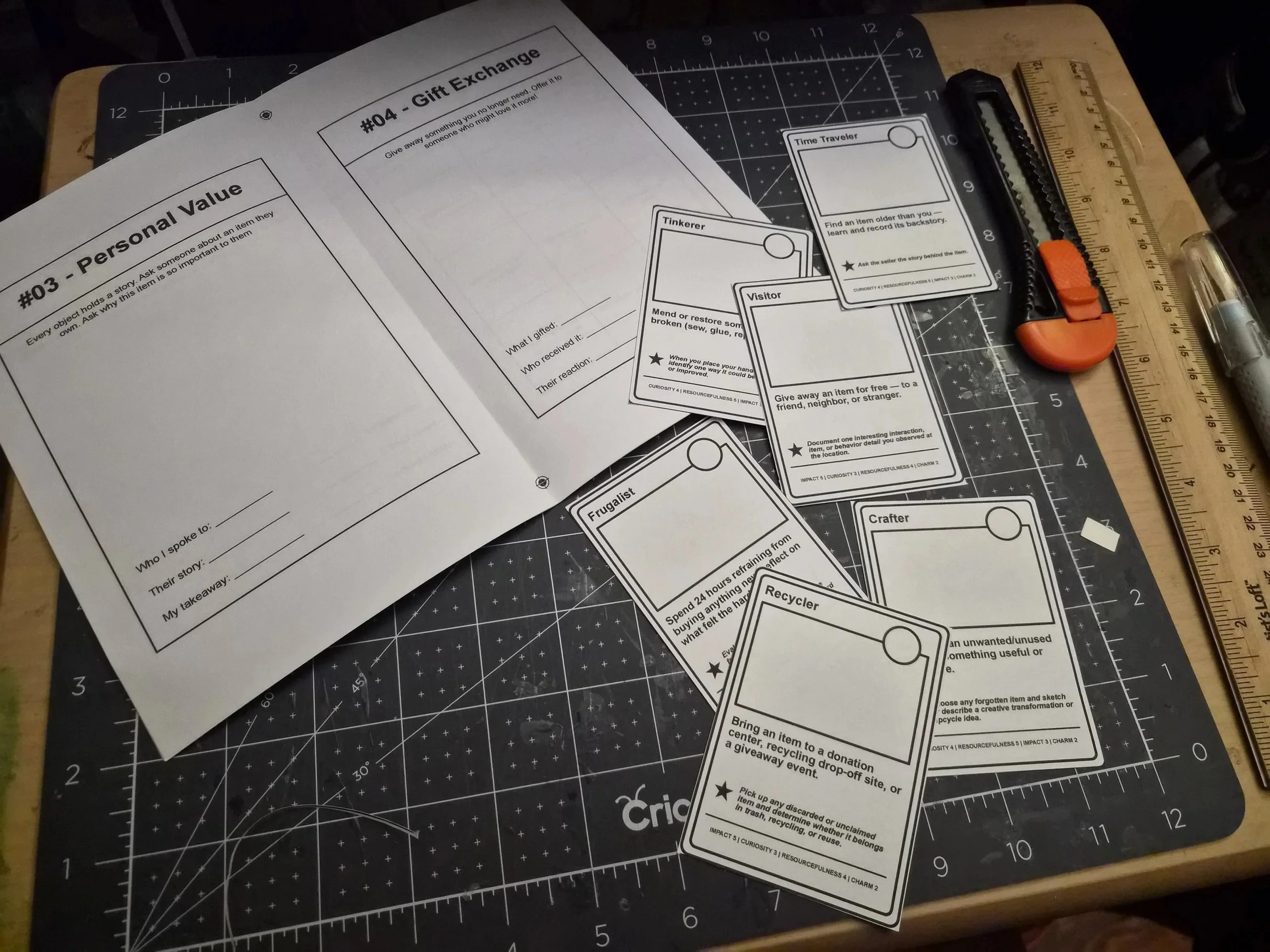
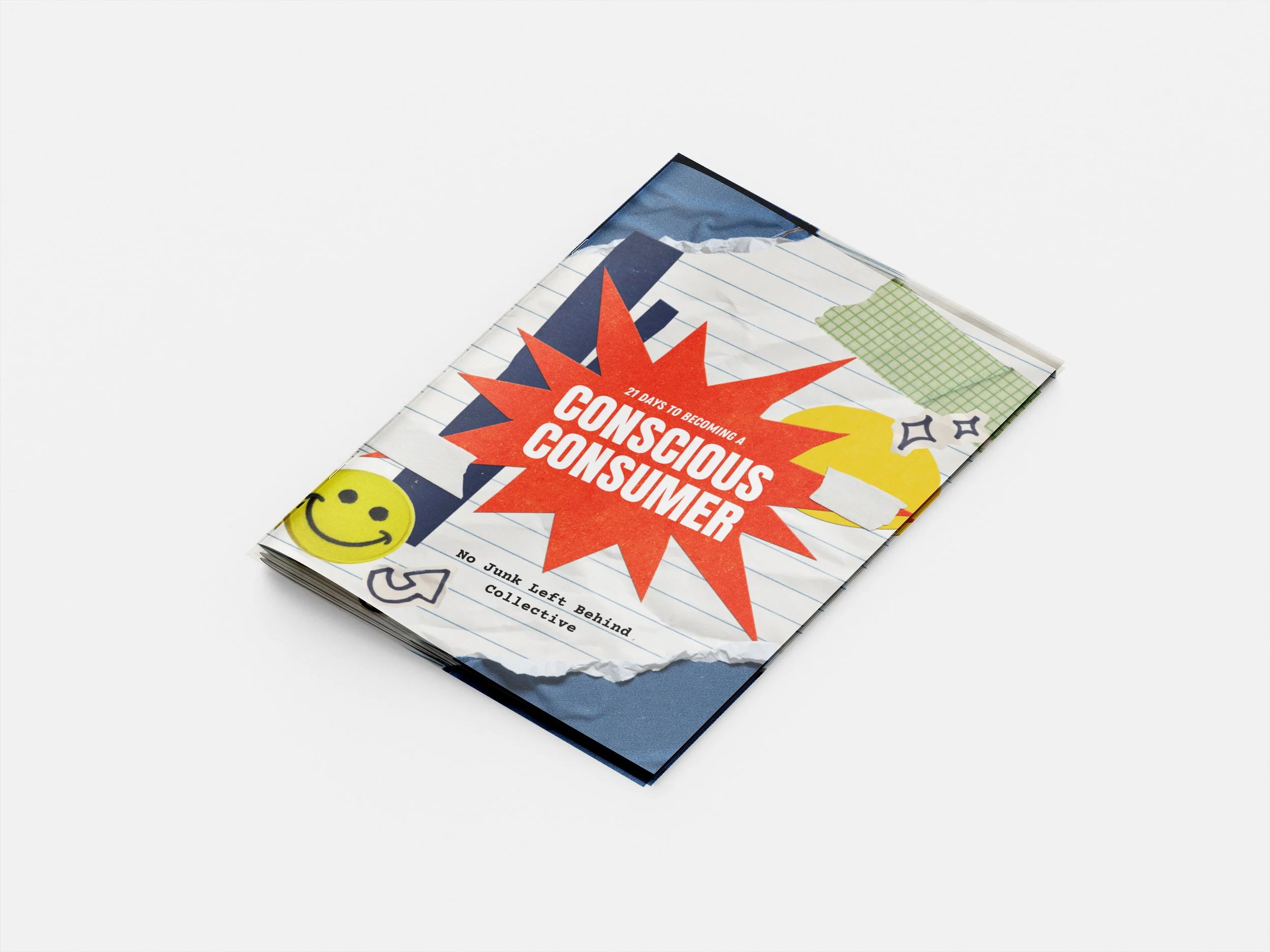
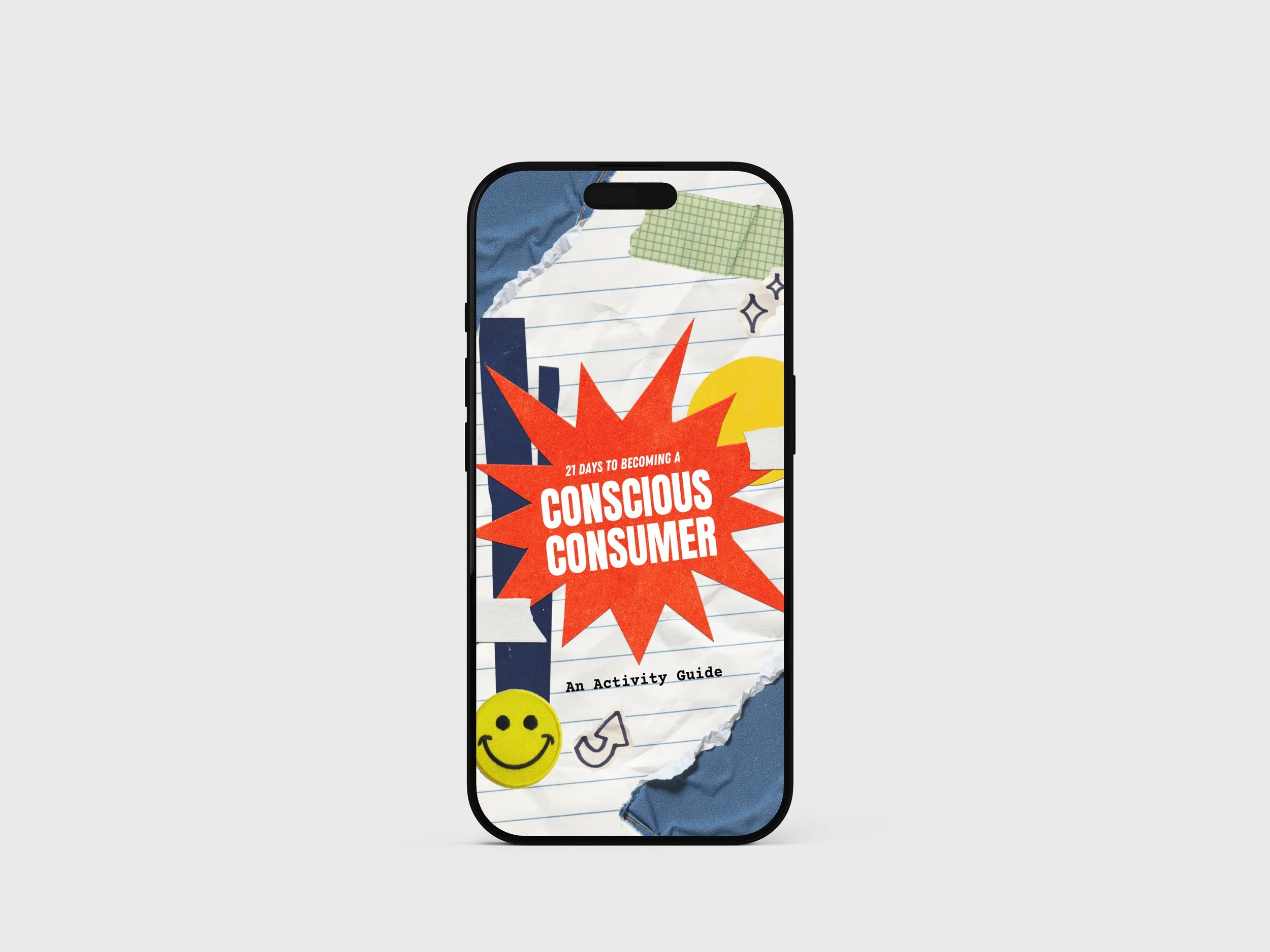
As an end result of the prototyping iterations, the final product was a Conscious Consumer Guidebook - designed to encourage readers to explore their creativity and educate them about the importance of shopping (and making) sustainably.
The End Result